
3 hr 30 min
Singapore Night Food Tour with 9 Tastings
Discover authentic hawker dishes and riverside nightlife on a guided culinary adventure through Singapore's waterfront districts
Reserve
Hand-picked by our editors — only the best 5 evening food experiences from 47 reviewed.
Verified partners for every tour, free cancellation where available, and instant confirmation on every booking.
3 hr 30 min
Discover authentic hawker dishes and riverside nightlife on a guided culinary adventure through Singapore's waterfront districts
Reserve
4 hr
Explore three vibrant neighborhoods while sampling a dozen authentic dishes from hawker stalls to Michelin-starred gems.
Reserve
3 hr
Discover Singapore's culinary heart on a 3-hour guided evening tour through Chinatown's hawker centers
ReservePrices from verified partners. Availability updates in real time at checkout. Free cancellation policies apply where shown.
The landmarks, rooms, and views travelers on this tour remember — all visible on a single visit.
A historic landmark featuring Victorian-era cast-iron architecture from 1894, famously known for its evening satay street.
One of the largest hawker centres in Singapore, offering a massive variety of traditional Chinese dishes and local favorites.
The iconic golden-domed mosque in Kampong Glam, serving as the cultural heart of the Malay-Muslim district.
A vibrant blend of a wet market and hawker centre in Little India, famous for its authentic curries and biryani.
A trendy street in Kampong Glam covered in vibrant murals, independent boutiques, and lively evening cafes.
They complement each other; travelers who prioritize educational depth find a singapore food tour night superior for navigation, while independent diners prefer the self-guided approach for schedule flexibility.
| Feature | Top pick Structured Food Tour | Self-Guided Visit |
|---|---|---|
Structure and Guidance |
Professional guide led itinerary | Independent navigation |
Hidden Gem Access |
Curated off-menu finds | Publicly accessible stalls |
Total Cost |
120–180 SGD inclusive | 15–40 SGD consumption based |
Group Socialization |
Shared culinary discovery | Private or solo dining |
Language/Cultural Context |
Deep dive into heritage | Limited local interaction |
Food Variety/Control |
Fixed tasting menu | Full personal selection |
| See tickets → |
Verdict: Choose a singapore food tour night tour if you seek historical context and hassle-free logistics, but opt for a self-guided visit if you value autonomy over your singapore food tour night tickets.
Choose your ticket, select your date, and reserve in under two minutes. Secure checkout handled by our verified partner.
Instant confirmation by email, with a mobile voucher you can save offline. No printing, no queuing at a collection desk.
Arrive at the entrance, show your voucher on your phone, and walk in. Most tickets include priority or skip-the-line access.
Practical details for your visit straight from our verified partners — hours, access, rules, and how to get there.
Casual clothing is perfectly acceptable for any singapore food tour night. Avoid beachwear or overly revealing clothing if you plan to enter religious sites during your walk.
Keep belongings secure and compact as hawker centres are public, bustling spaces. There are no formal security checkpoints for these tours.
Photography is encouraged at public markets and landmarks. Always ask for permission before taking close-up photos of hawker stall owners or patrons.
Most hawker centres used during a singapore food tour night are wheelchair accessible, though some older districts have uneven pavement. Please advise your operator of specific mobility needs in advance.
Families are welcome, though be prepared for crowded spaces and high-traffic pedestrian zones. A singapore food tour night can be an educational experience for children to see diverse food preparation.
Most tours include various tastings. Mention dietary restrictions like vegetarian or allergy needs to your guide beforehand. Entrance fee: 0 SGD (Free entry to public hawker centres; individual food items vary in cost.)
Best time to go, insider tips, nearby landmarks, and the cancellation fine print — flip through to skim what matters to you.
Flexible, no hidden fees.
Full refunds are typically available if cancelled at least 24 hours in advance. No refunds are provided for last-minute cancellations within the 24-hour window.
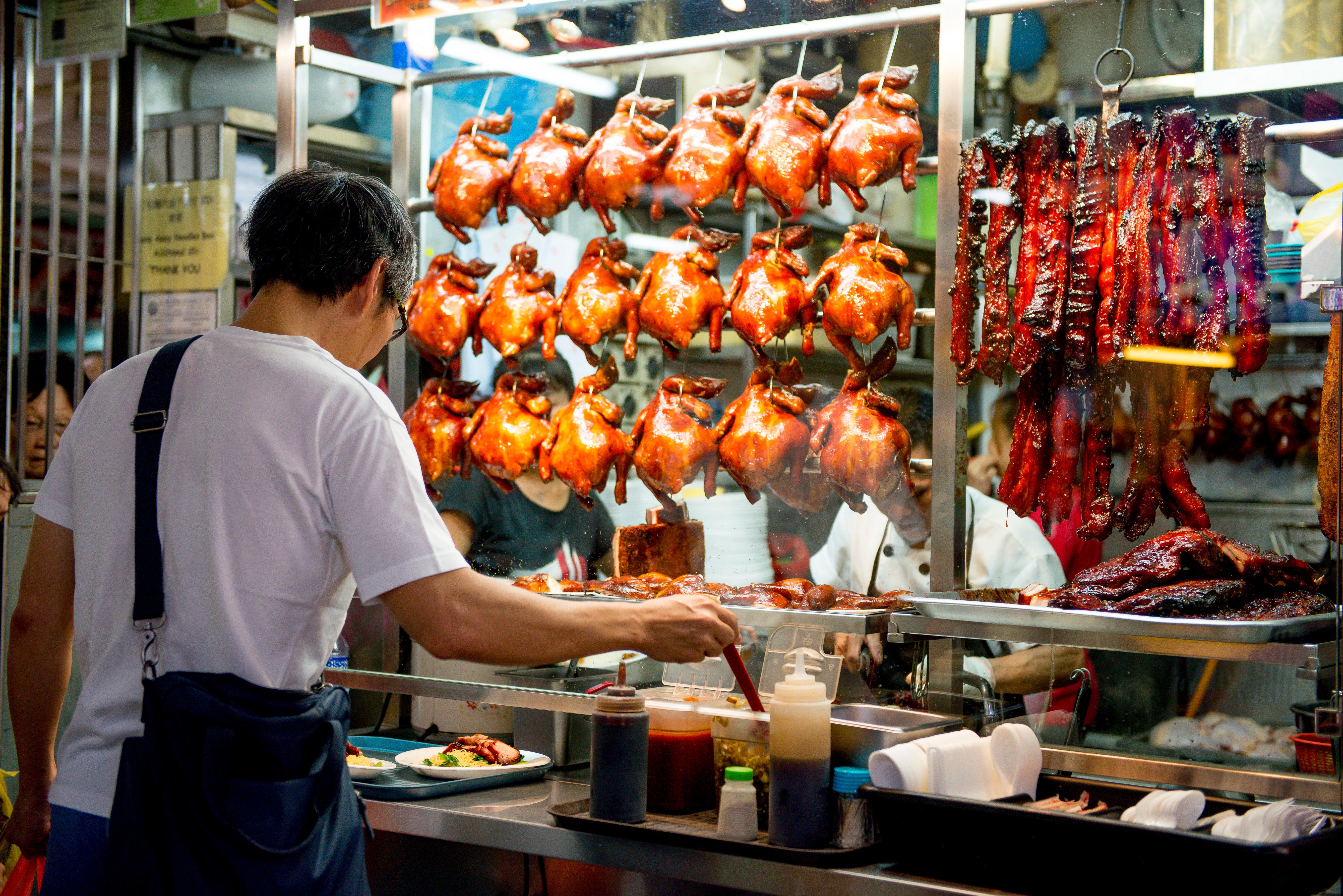
Singapore's hawker centres were inscribed on UNESCO's Representative List of the Intangible Cultural Heritage of Humanity in 2020, recognising a food culture forged across seven decades of open-air dining. What began as street-side push-cart vendors in the 1950s evolved into purpose-built communal dining halls housing dozens of specialist stalls, each perfecting a single dish across generations. By the 1980s the government had consolidated more than 20,000 itinerant hawkers into permanent centres, preserving recipes that might otherwise have vanished and anchoring neighbourhoods around shared tables and monsoon-proof roofs. Today Singapore counts over 100 hawker centres, but a singapore food tour night reveals why the evening shift matters. Stalls fire up at dusk when the equatorial heat softens, queues lengthen, and the rhythm of wok-tossing and cleaver-work picks up tempo. Chinatown's open-air complexes glow under string lights, Little India's banana-leaf counters serve late into the night, and Kampong Glam's Arab Street spills aromatic smoke from satay grills. The UNESCO citation noted that hawker culture transcends mere sustenance—it functions as a living archive of migration, adaptation, and culinary invention, where Hainanese chicken rice sits beside Tamil fish-head curry and Malay laksa. Architecturally, hawker centres occupy a utilitarian register: reinforced concrete frames, ceiling fans the size of aircraft propellers, and stainless-steel prep counters worn smooth by decades of service. Yet their modesty conceals rigorous design. Ventilation shafts channel smoke upward, floor gradients ensure drainage during tropical downpours, and stall assignments follow heritage logic—certain corners reserved for family lines that have occupied the same pitch since the 1970s. Lau Pa Sat, a cast-iron Victorian market hall dating to 1894, now shelters satay stalls each evening, its octagonal clock tower a fixed point in the Central Business District's glass forest. Evening food tours across Chinatown, Little India and Kampong Glam unfold as curated progressions through this layered geography. Guides lead small groups from char kway teow sizzled over roaring flames to chendol spooned from steel bowls, pausing to explain why certain stalls draw hour-long waits and others remain neighbourhood secrets. The pedagogy is sensory: you taste the difference between hand-pulled and machine-cut noodles, learn to read a queue's composition, and understand how a single hawker centre can contain a dozen regional Chinese dialects in its vendor roster. Most singapore food tour night tickets grant access to tastings at nine to twelve stalls, compressing what might take a solo diner weeks to discover into a three-hour immersion that ends when the last stall shutters and the floor cleaners arrive.
"Hawker culture functions as a living archive of migration, adaptation, and culinary invention."
A step-by-step walkthrough of the visit — what you'll see, how long each stage takes, and the details that matter.
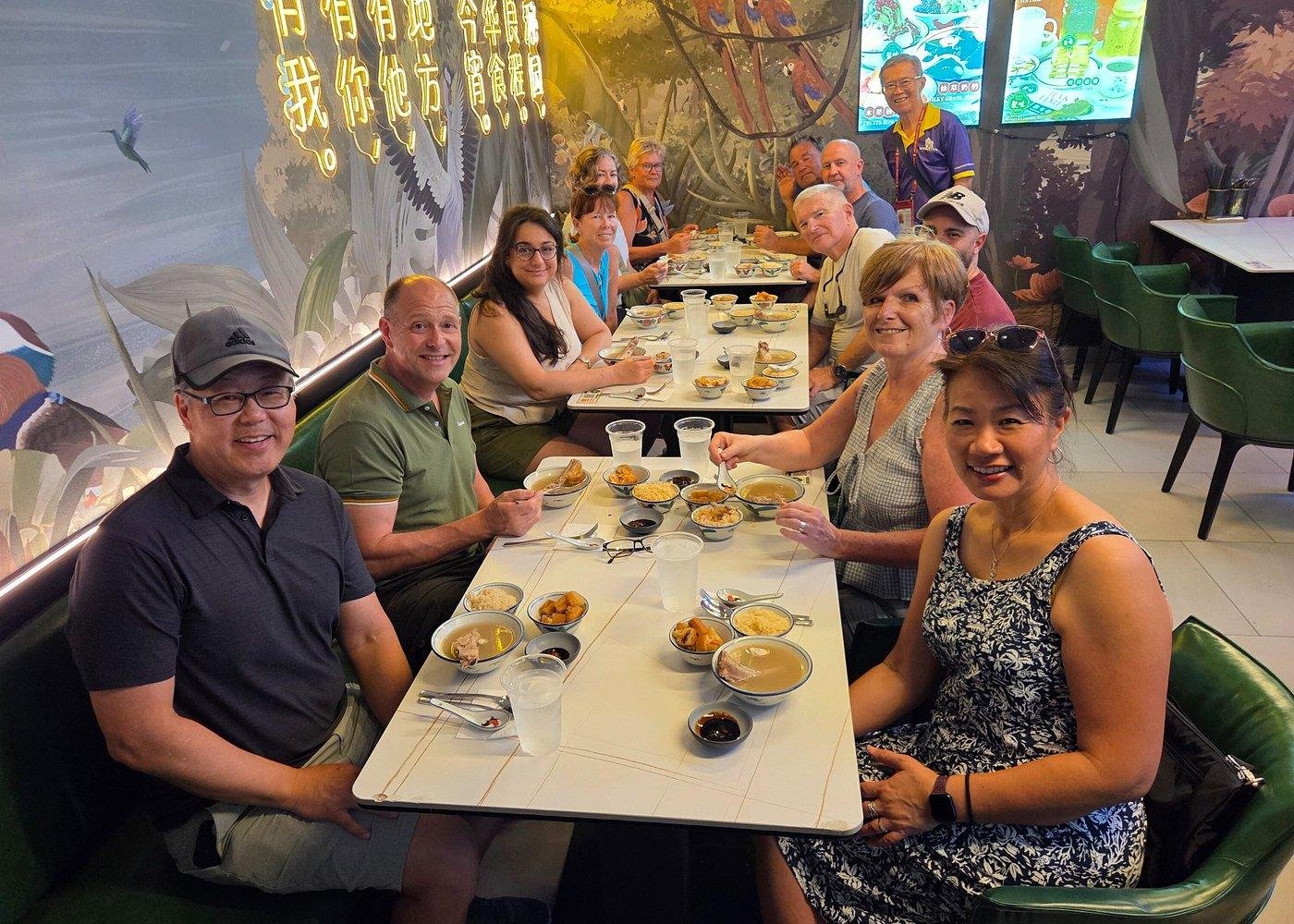
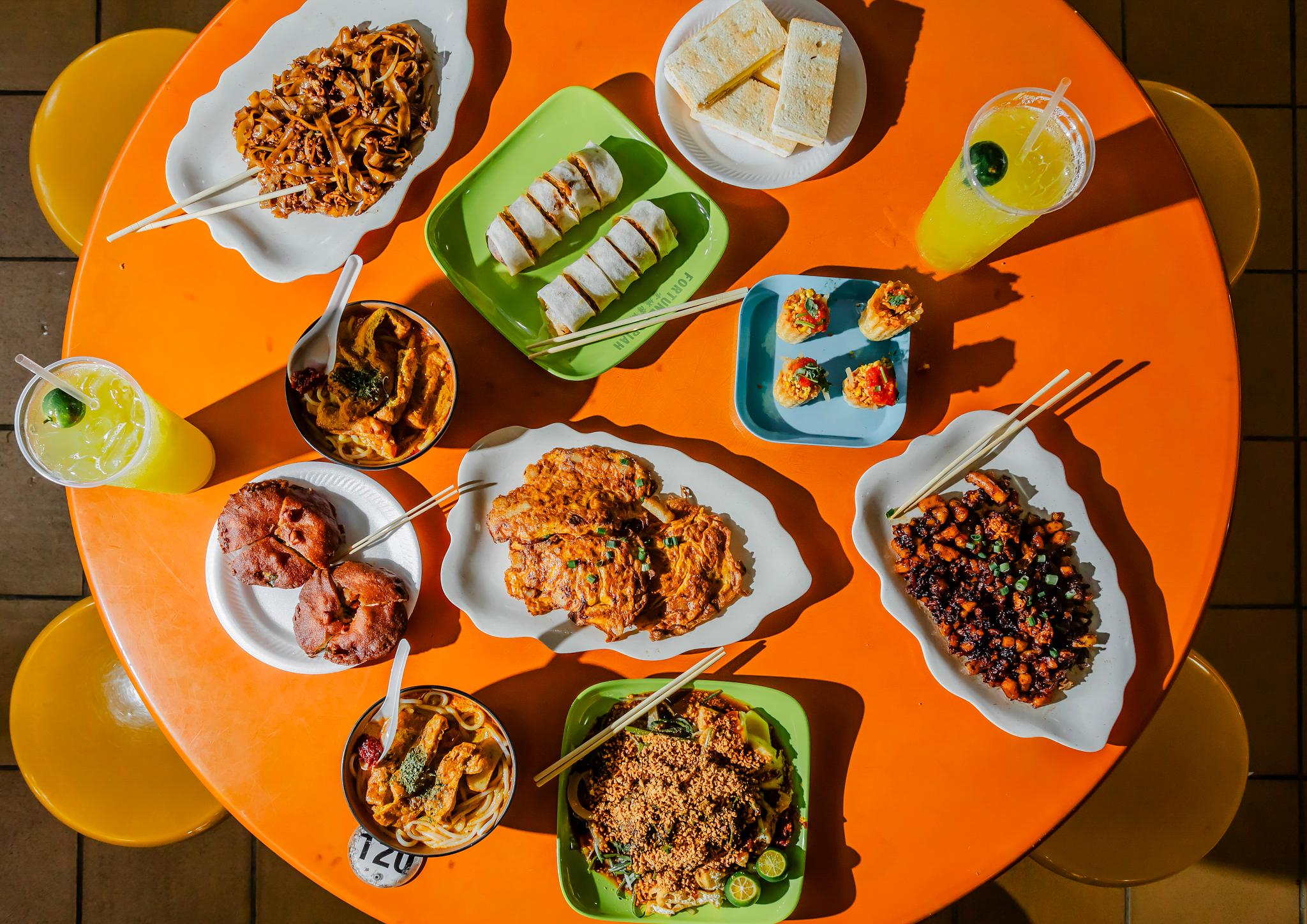
You meet your guide at the edge of Chinatown as the last office workers stream past and the first woks ignite. The group is small—eight strangers who will share tables and trade bites by the end of the night. You duck into a narrow hawker centre where ceiling fans churn humid air thick with garlic and caramelised soy. Your guide orders in rapid Hokkien at a corner stall known for char kway teow, and within minutes a plate arrives, noodles glistening, lap cheong sausage coins scattered across the top. You eat standing, elbows on a communal counter, learning that the best stalls never rush the wok. You move to Little India, where banana leaves replace plates and a Tamil auntie ladles fish-head curry from a pot large enough to bathe in. The guide explains the spice layering—curry leaves first, then mustard seeds, finally coconut milk to temper the heat. You wipe the leaf clean with your fingers, following the local method. The tour continues to Kampong Glam, where satay smoke drifts across Arab Street and you queue at a grill turning out skewers by the hundred. You dip each stick in peanut sauce, counting twelve bites across the evening—from popiah rolls in Chinatown to cendol shaved ice as the final stop. By 22:00 the hawker centres begin their nightly hose-down, and you step back into the night, full and rewired to Singapore's most democratic tradition.
The best arrival window is 18:00–22:00 for optimal hawker center atmosphere and street food availability.
Yes, most hawker centres are open-air and ground-level, making them accessible to all visitors.
While entry to hawker centres is 0 SGD, guided singapore food tour night tours require a pre-purchased ticket for the curated food samples and local guide.
Yes, hawker stalls are government-regulated and hygiene-graded, making them a safe and authentic part of a singapore food tour night.
'Choping' is the local custom of reserving a seat with a packet of tissues, though your tour guide will usually manage this for the group.
Dress comfortably for the tropical climate and wear walking shoes as you will be exploring various neighbourhoods on your singapore food tour night.
Yes, families are encouraged, though the walking and evening timing should be considered for younger children.
Most tours include guided navigation between landmarks and 6–10 food and drink tastings at iconic stalls during your singapore food tour night.
You can typically receive a full refund if you cancel your singapore food tour night reservation at least 24 hours in advance.